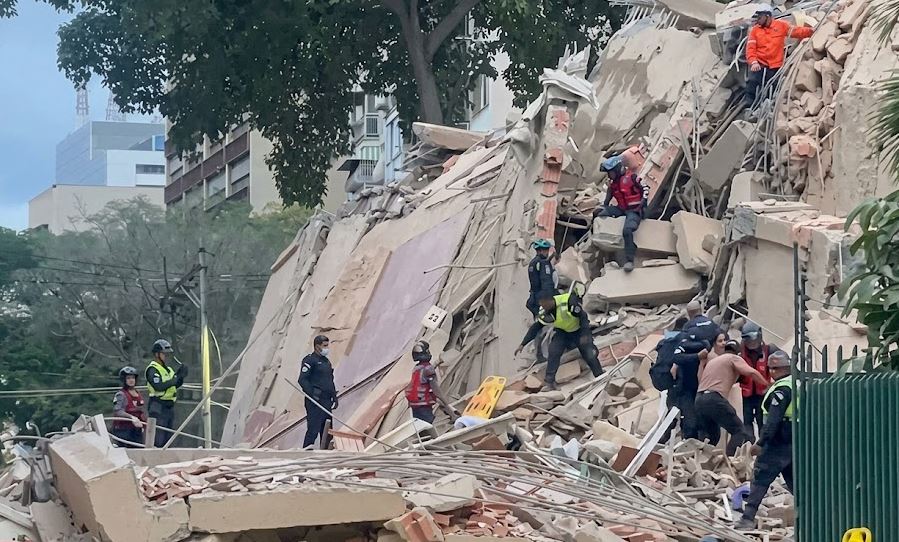
The desperate search for survivors in Venezuela has become a heartbreaking race against time after the country's catastrophic twin earthquakes left entire neighborhoods reduced to rubble, claimed more than 1,400 lives, and left nearly 70,000 people still unaccounted for.
While rescue crews continue digging through collapsed buildings with heavy machinery, ropes, shovels-and in many cases, their bare hands-the odds of finding survivors are rapidly diminishing after the critical 72-hour rescue window officially closed. Yet families refuse to give up, clinging to hope that loved ones may still be trapped beneath the mountains of concrete.
The devastation has centered on the coastal state of La Guaira, where entire apartment blocks crumbled and streets were transformed into disaster zones. Satellite imagery suggests nearly one-third of the buildings in Catia La Mar have sustained damage, highlighting the staggering scale of destruction that has unfolded in just a matter of days.
The humanitarian crisis continues to escalate as officials estimate that more than six million people have been affected by the disaster, including around two million residents in Caracas. Rescue teams from the United States, Mexico, Brazil, France, El Salvador and several other countries have joined local emergency workers in one of the largest international rescue operations Venezuela has seen in decades. American personnel have even helped repair airport infrastructure while naval medical support remains stationed offshore to receive critically injured survivors.
But alongside the grief has come growing anger.
Residents have accused authorities of moving too slowly as heartbreaking scenes emerged of ordinary civilians conducting rescue efforts themselves. Witnesses claim some government officials arrived at disaster sites only long enough to take photographs before leaving, while frustrated crowds reportedly blocked heavy equipment from departing collapse zones, demanding every possible effort be made to save those still trapped beneath the rubble.
Adding to the uncertainty, more than 400 aftershocks have rattled the region since the initial quakes, keeping survivors on edge and complicating rescue efforts as unstable buildings threaten to collapse without warning.
With approximately 125 buildings believed to have completely collapsed, humanitarian officials warn the confirmed death toll could continue climbing in the coming days. For thousands of Venezuelan families still waiting for answers, every passing hour brings both fading hope and unbearable uncertainty as rescue workers continue their relentless search through the ruins.
What began as a natural disaster has rapidly become one of the deadliest humanitarian crises in Venezuela's modern history-and the full extent of the tragedy may still be unfolding


