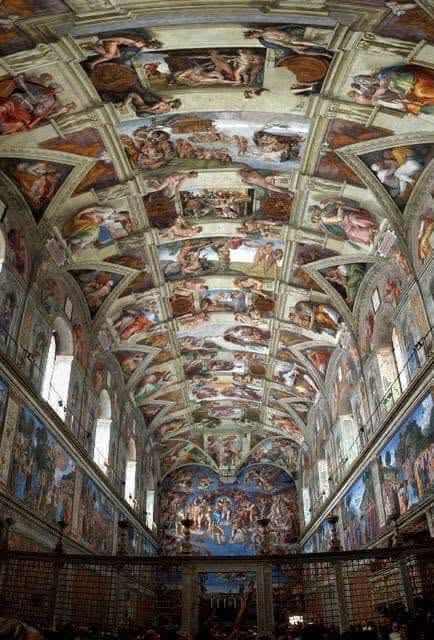
On November 1, 1512, worshippers in the Sistine Chapel had an extraordinary reason to look up. Pope Julius II celebrated Mass beneath Michelangelo's newly completed ceiling, inaugurating a monumental work that placed the drama of creation, human rebellion and divine deliverance above the congregation. More than five centuries later, its biblical imagery continues to command attention.
Yet this celebrated achievement began with a damaged ceiling-and a considerably smaller artistic plan.
According to the Vatican Museums, a large crack appeared in the chapel's ceiling in 1504. Structural repairs followed, and Michelangelo signed a painting contract on May 8, 1508. The original commission envisaged twelve apostles accompanied by ornamental decoration. Michelangelo pressed for something more ambitious, and Julius II allowed him to develop a much broader programme.
What emerged was a sweeping encounter with Scripture.
Nine central scenes draw viewers into the opening chapters of Genesis: God ordering creation, Adam and Eve receiving life, humanity's expulsion from Eden, and the troubled world of Noah. Around these scenes, prophets, sibyls and Christ's ancestors extend the ceiling's religious scope beyond the first human family.
The familiar Creation of Adam belongs within this larger and more unsettling story. The ceiling moves between the wonder of life received from God and the consequences of human disobedience. Eden gives way to exile; the world's abundance gives way to the Flood. Even Noah's survival does not produce an uncomplicated ending: the programme includes his drunkenness as well as his sacrifice.
Read together, these images invite a theological reflection: humanity's dignity and humanity's vulnerability occupy the same ceiling. The beauty of creation does not conceal the gravity of sin.
The November anniversary also offers an opportunity to distinguish two masterpieces often associated with the chapel. Michelangelo's vast Last Judgment, covering the altar wall, was a later undertaking, painted between 1536 and 1541. Those attending the inaugural Mass in 1512 encountered the completed Genesis ceiling decades before that further transformation.
For Christian readers, the ceiling's enduring fascination reaches beyond artistic accomplishment. It gives visible form to questions at the heart of Genesis: where life comes from, how human beings misuse their freedom, and how judgment and preservation meet within the biblical story.
On November 1, 1512, those questions were suspended above a worshipping congregation. They still give viewers reason to pause-and look up.


