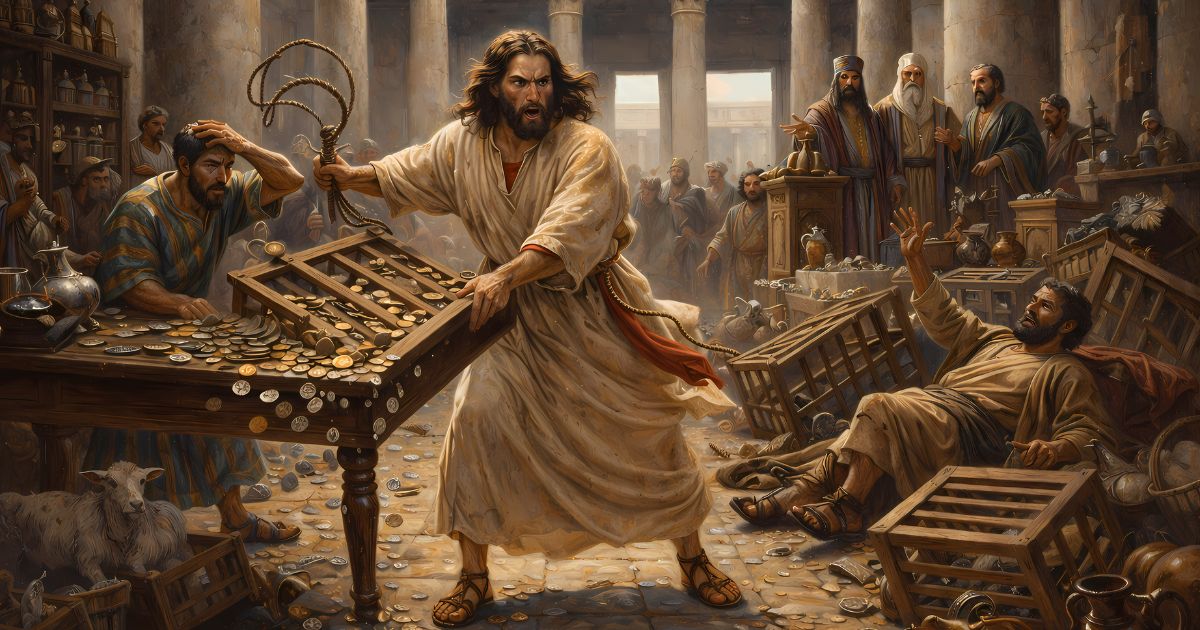
Holy Monday falls on March 30, 2026 - the day after Palm Sunday - and it marks one of the most striking moments of Holy Week: the moment Jesus walked back into Jerusalem and cleansed the Temple.
The crowds had cheered Him as King just the day before. But on Monday morning, Jesus returned not to celebrate - He returned to confront.
What is Holy Monday?
Holy Monday is the second day of Holy Week, observed every year on the Monday following Palm Sunday. In 2026, it falls on March 30. It is the day the Gospels record Jesus entering the Temple courts in Jerusalem and driving out those who had turned His Father's house into a place of commerce - overturning the tables of the money changers and the seats of those selling doves.
It is a day that is sometimes overlooked in Holy Week devotions, overshadowed by the drama of Palm Sunday and the weight of Maundy Thursday and Good Friday. But Holy Monday carries its own unmistakable power.
What happened on the first Holy Monday?
After His triumphal entry into Jerusalem on Palm Sunday, Jesus returned to the Temple the following morning. What He found there moved Him to action.
The Temple courts - the outer area where Gentiles were permitted to come and worship - had been filled with merchants and money changers who set up tables to exchange foreign currency and sell animals for sacrifice. While these were services tied to Temple worship, they had taken over a space that was meant to be a place of prayer for all nations.
Jesus drove them all out. He overturned the tables of the money changers and the benches of those selling doves. And He quoted two passages of Scripture in one breath - Isaiah 56:7 and Jeremiah 7:11 - declaring, "My house will be called a house of prayer, but you are making it a den of robbers."
It was not an act of anger without purpose. It was a deliberate, prophetic act - the Son of God reclaiming what belonged to His Father.
After the Temple was cleared, something remarkable happened. The blind and the lame came to Jesus in the Temple courts, and He healed them. Children began shouting "Hosanna to the Son of David!" The chief priests and teachers of the law heard it and were indignant. Jesus answered them with Psalm 8:2 - "From the lips of children and infants You, Lord, have called forth Your praise."
That evening, Jesus and His disciples left Jerusalem and returned to Bethany for the night.
What does Holy Monday mean for us today?
The cleansing of the Temple is not just a historical episode - it is a question directed at every believer. What has been allowed to crowd into the space that belongs to God?
For the Christian, the body is described in Scripture as the temple of the Holy Spirit. Holy Monday is an invitation to examine what has been permitted to take up residence where worship belongs - whether that is distraction, compromise, or the slow drift away from what is sacred. It is a call to the same kind of clarity and intention that Jesus demonstrated when He walked into the Temple courts that morning.
It is also a reminder that the same Jesus who rode in gently on a donkey to shouts of Hosanna is the same Jesus who wept over Jerusalem, cleansed the Temple, and walked willingly toward the cross - fully aware of every step. His tenderness and His authority have never been in conflict.
Holy Week continues
Holy Monday is the second of seven sacred days leading to Easter Sunday on April 5, 2026. Each day carries its own weight, its own story, and its own invitation to draw closer to the heart of what the Christian faith is built upon.
Related: Palm Sunday 2026: When It Is, What It Means, and How Christians Around the World Celebrate It
Related: Holy Week 2026: Full Guide to Every Day, What It Means, and Why It Matters


