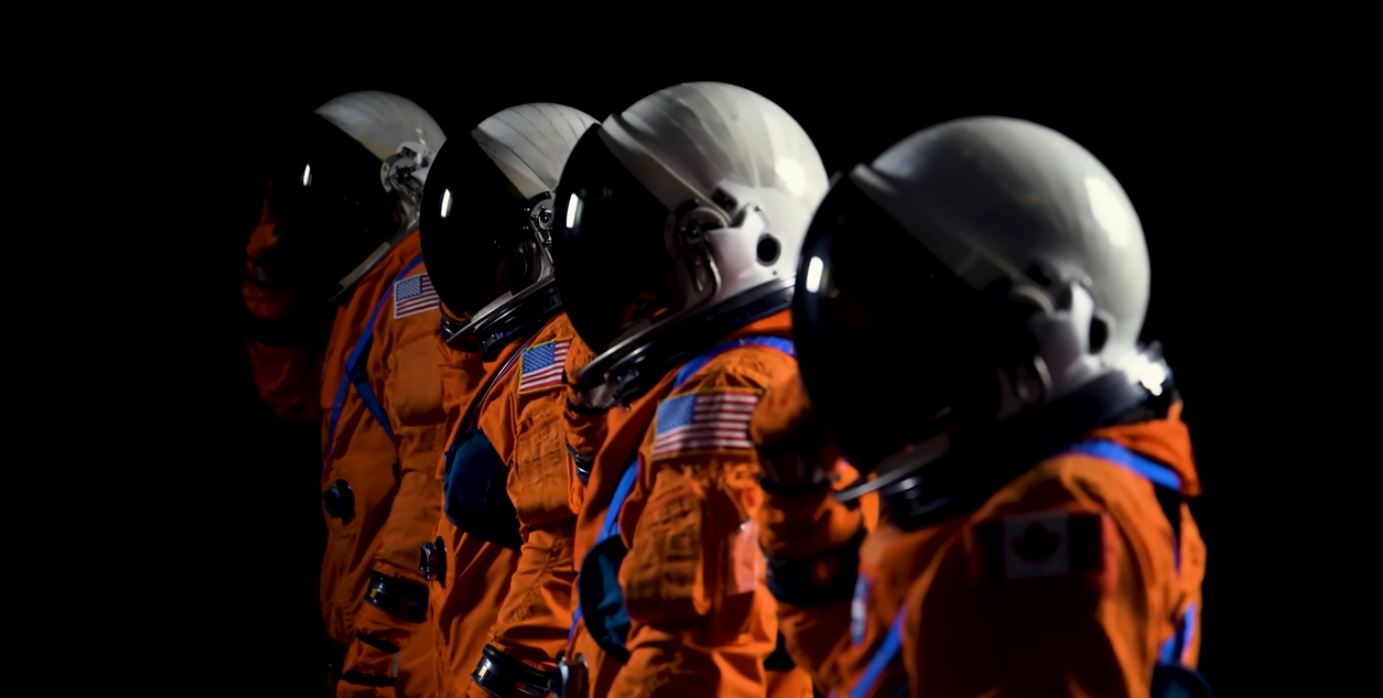
Right now, as you read this, four human beings are in space heading toward the moon.
NASA's Artemis II lifted off from Kennedy Space Center at 6:35 p.m. EDT on Wednesday, April 1, carrying commander Reid Wiseman, pilot Victor Glover, mission specialist Christina Koch, and Canadian Space Agency astronaut Jeremy Hansen on an approximately 10-day journey around the Moon and back to Earth. It is the first crewed lunar mission in 53 years - since Apollo 17 in 1972.
The crew slept in their capsule last night. Today, a critical engine burn will push them out of Earth's orbit and send them on their way to the Moon. They swing around it on April 6. They splash down in the Pacific Ocean on April 10.
If all goes according to plan, the crew will set a record for the farthest distance humans have ever traveled from Earth - 252,000 miles - as they loop behind the far side of the Moon and return home.
A crew built for this moment
Victor Glover became the first person of color, Christina Koch the first woman, and Jeremy Hansen the first non-U.S. citizen to travel beyond low Earth orbit. The Americans who blazed the trail to the moon more than half a century ago were white men chosen for their military test pilot experience. This first Artemis crew includes a woman, a person of color, and a Canadian - none of them alive during NASA's Apollo program.
For Glover in particular, the mission carries weight that goes beyond the historic. As one of NASA's few Black astronauts, Glover sees his presence on the mission as "a force for good." He is also openly, unapologetically a man of faith.
"There are no atheists on top of rockets"
Victor Glover is a member of the Church of Christ and has never been quiet about the role faith plays in his life and career. "My faith and my science and operational and military career are interwoven," he has said. "My career is fed by my faith." During his time aboard the International Space Station, he took communion cups and a Bible into space. When asked how sitting on top of a rocket connects to his faith, his answer was simple and memorable: "In the military, there's a saying that there are no atheists in foxholes. There aren't any on top of rockets, either."
He also pushes back on the idea that faith and science are in conflict. "I believe in both," Glover has said, "and I don't find them to be in conflict."
The timing that no one planned - but everyone notices
Artemis II launched on April 1. The crew circles the Moon on April 6 - Easter Sunday. They return to Earth on April 10.
Four human beings are traveling to the vicinity of the Moon during the same week that billions of Christians worldwide pause to remember the death and resurrection of Jesus Christ. The same week churches sing about an empty tomb, about new life, about a God who made the heavens and came down to walk among us - four people will be looking back at this Earth from a distance no human has reached in over half a century.
From inside the Orion capsule, the Moon will appear about the size of a basketball held at arm's length. And Earth - every person on it, every Easter sunrise service, every church packed with people singing - will be a small, bright light in the dark.
The God who spoke the universe into existence is the same God whose resurrection Christians celebrate this Sunday. The astronauts heading toward that universe this week are not just testing hardware. They are doing what humans have always done - reaching toward the unknown, driven by something that looks a lot like faith.
Godspeed, Artemis II.


