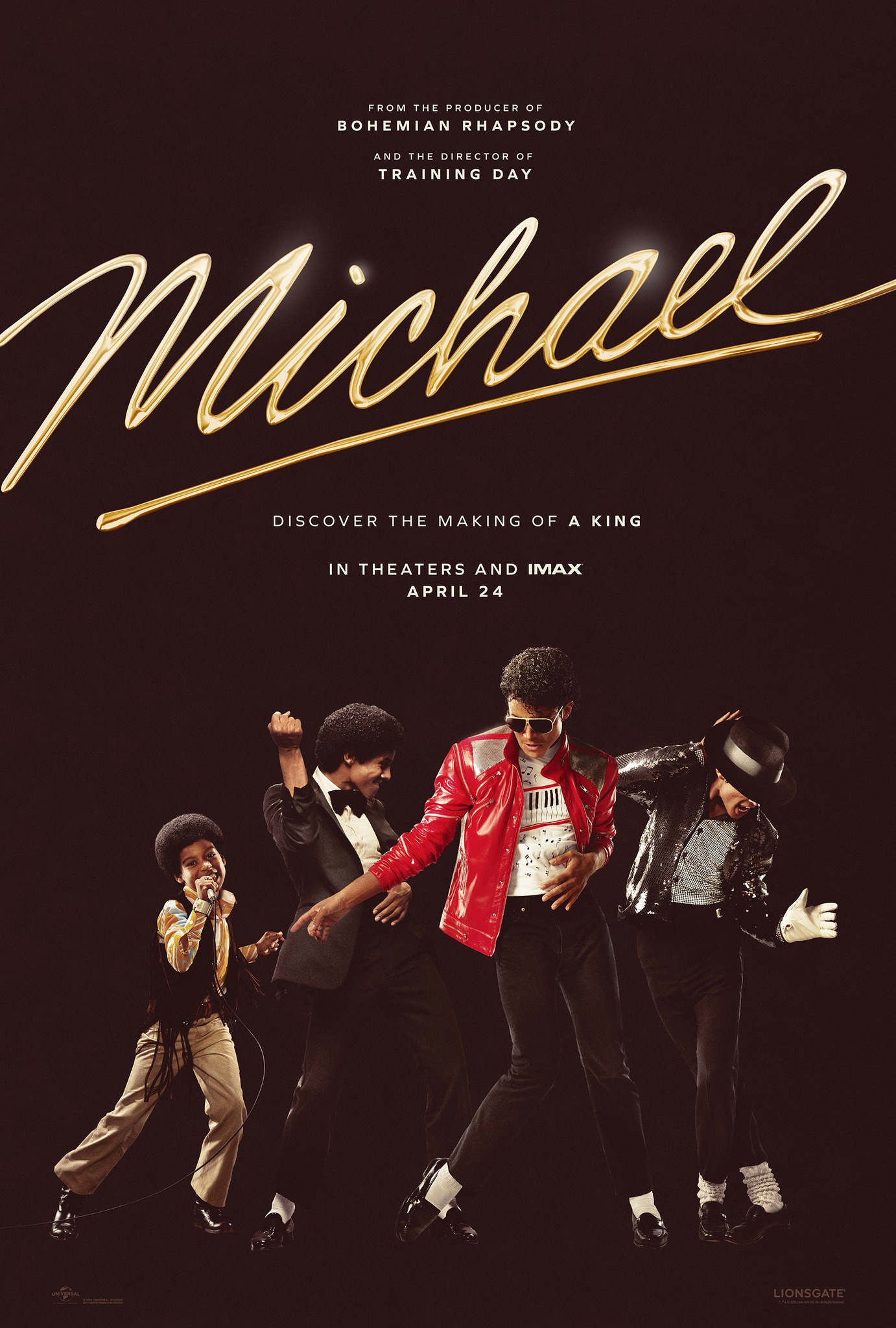
Michael holds a 38% critics score and a 97% audience score on Rotten Tomatoes - one of the widest gaps between critics and fans in recent memory. The divide is not random. Critics and fans are essentially watching two different films: one about what was shown, the other about what was left out.
Bill Bray, the family divide, Katherine's faith, Michael's Jehovah's Witness years - you are now better equipped than most audiences to judge this film fairly. Here is the honest breakdown.
What the Film Gets Right
Jaafar Jackson's performance is the real thing
No serious reviewer disputes this. Variety's Owen Gleiberman wrote that Jaafar "nails the look, the voice, the electrostatic moves - and the mix of delicacy and steel that made Michael who he was." The Guardian's Peter Bradshaw acknowledged that "Jaafar fabricates Michael's onstage dancing and singing style with terrific, intuitive flair." Even critics who panned the film in every other category agreed: the performance itself is extraordinary.
The Pepsi fire - and what Michael did after
The film portrays the 1984 Pepsi commercial accident - where pyrotechnics set Michael's hair and scalp on fire - and includes his recovery in the burn ward and his decision to donate the settlement money to the hospital that treated him. What the film compresses slightly is the actual amount: in reality, Jackson donated the $1.5 million Pepsi settlement to the Brotman Medical Center in Culver City, California, specifically to establish the Michael Jackson Burn Center for Children. The spirit of the scene is accurate. The detail is softened.
The Beat It choreography scene
There is a standout sequence where Michael goes into an LA club with real gang members and draws the choreography for the "Beat It" video directly from watching their moves - wanting a dance-pop aesthetic that channels real street anger. This moment is one of the film's most creatively honest: it shows an artist absorbing the world rather than performing for it.
The Bill Bray relationship
The film correctly portrays Bill Bray as the father figure who stepped in where Joe Jackson failed. We see moments of Michael leaning on Bray when tensions rose with his father - someone he could simply be himself around. That dynamic is true to what the historical record shows.
Michael's generosity toward children
The film shows Michael visiting seriously ill children in pediatric cancer wards, buying them toys, and sitting with them in long private conversations - genuinely listening rather than performing for the cameras. Critics questioned whether this was invented for sympathy. It was not. Historical records confirm he made numerous unpublicized visits to children's hospitals in cities around the world, including Sydney Children's Hospital, Rome's Bambino Gesù, and London's Great Ormond Street Hospital. He did this quietly, without press.
Joe Jackson as the story's central antagonist
Colman Domingo plays Joe Jackson as a domineering, controlling figure whose deal-making - including a secret arrangement with Don King to force Michael back on a Jacksons reunion tour - represents everything Michael was trying to escape. The film frames Michael's entire creative liberation as inseparable from breaking free of his father. That framing is historically grounded.
What the Film Left Out
The faith chapter entirely
Katherine Jackson became a committed Jehovah's Witness in 1963 and took Michael on door-to-door missions to spread the word. Even at the height of his fame, Michael would go out in disguise - fat suits, fake mustaches - to knock on strangers' doors and talk about God. His sister La Toya confirmed they studied the Bible five days a week at home and attended the Kingdom Hall together. The film mentions Katherine's faith in a single line. The full story of how deeply Michael's faith shaped his identity - and how painfully he had to abandon it when Thriller came out - is absent entirely. For JubileeCast readers, that is the chapter that matters most.
The 1987 disassociation from the Jehovah's Witnesses
The tension between Michael's faith and his career reached a breaking point when Thriller was released and church elders warned him he could be expelled. He formally disassociated in 1987. His own mother, under congregation rules, was not permitted to discuss it with him. That rift - a son and a mother separated by doctrine in the middle of the most famous creative run in pop history - is nowhere in this film.
Janet Jackson, Rebbie, and Randy three of his siblings
Beyond Janet's known decision to decline participation, a careful headcount of the film reveals only six siblings portrayed - meaning Rebbie and Randy are also entirely absent. Randy's absence causes several significant omissions later in the story.
The 1993 allegations and everything that followed
The film was originally written to begin with the 1993 child molestation investigation - police lights outside Neverland, Michael staring at his reflection. That entire third act was scrapped after lawyers discovered a decades-old settlement agreement prohibited the allegations from being depicted on screen. The reshoots cost an additional $10 to $15 million and delayed the film by months. The result is a story that ends in 1988, at Michael's peak, before any of the darkness that defined the final two decades of his life.
The deeper complexity of who Michael was
Multiple critics noted the film "refuses to paint its subject as anything less than saintly" and that it feels as if Michael has been "deified." One critic wrote: "This is a grievous insult to him as an artist. By making him so uninteresting, the film actually does more damage to his legacy than the controversies ever did." The irony is painful: a film designed to celebrate Michael Jackson may have made him less human, less interesting, and ultimately less knowable than he deserves.
Conclusion
Michael is two hours of undeniable spectacle built on an extraordinary performance - and a deliberate choice to stop the story before it gets complicated.
Michael Jackson was a man of enormous talent, profound generosity, genuine faith, and real contradictions. The best films about people like that don't flinch. This one does. And it is still worth seeing - because Jaafar Jackson gives it something no screenplay could manufacture: the unmistakable presence of a family carrying their most complicated story forward, on screen, in front of the world.
That counts for something. It just does not count for everything.
Michael is in theaters now.


