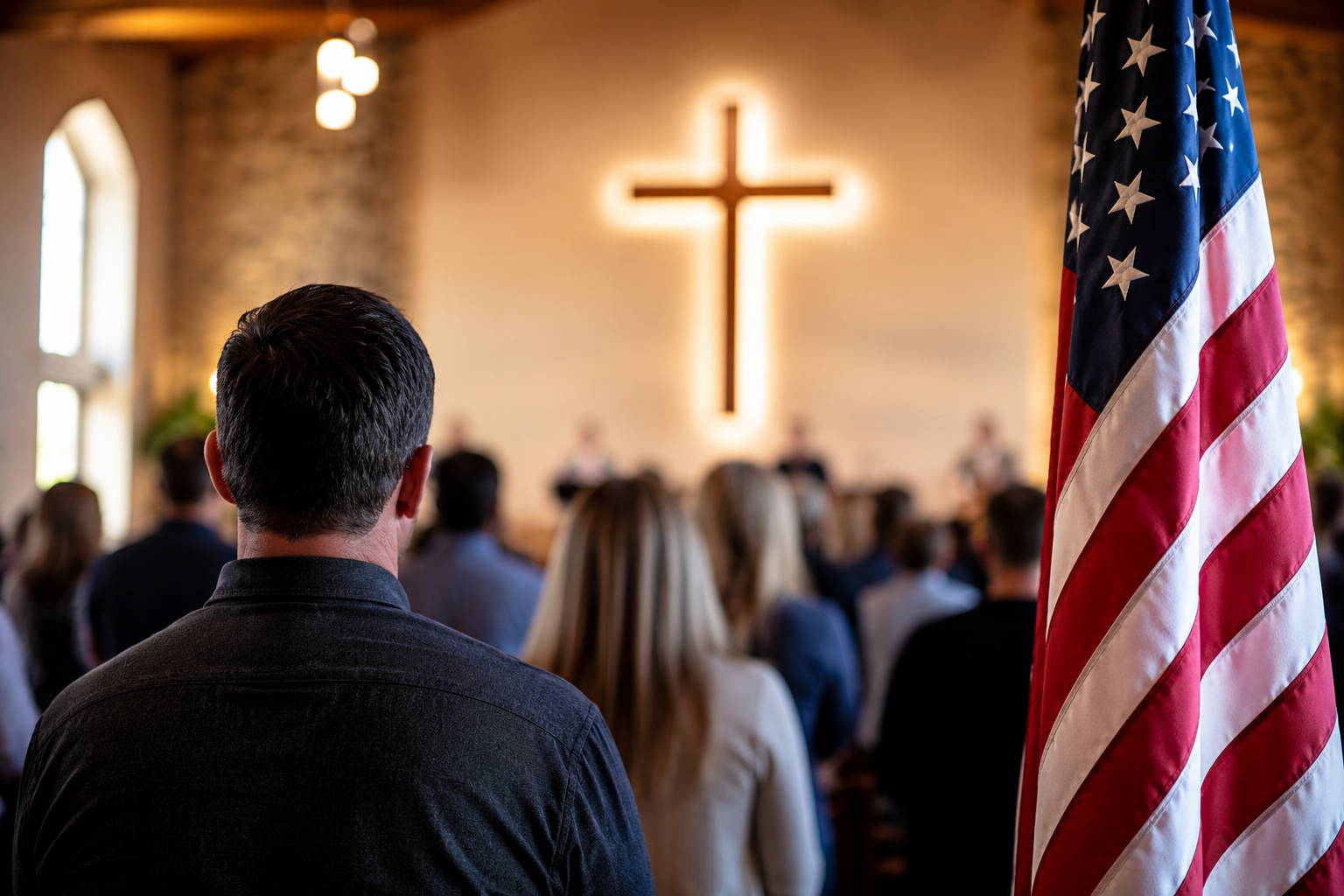
As churches across the United States prepare to celebrate Independence Day, influential pastor and theologian John Piper is once again challenging one of evangelicalism's most familiar traditions: patriotic worship services.
The founder of Desiring God says American flags, pledges of allegiance, military tributes, and patriotic songs should never compete with the central focus of Christian worship-Jesus Christ.
Responding to a pastor who inherited a church with a long-standing tradition of celebrating patriotic holidays during Sunday services, Piper admitted the practice leaves him with more than just mixed feelings.
"I share your discomfort," Piper said. "Indeed, it is more than discomfort. I think there are real biblical principles at stake."
The pastor who submitted the question described growing up in a conservative church where Fourth of July, Memorial Day, Veterans Day, and even the anniversary of the September 11 attacks were regularly observed during worship through patriotic songs, flag ceremonies, military recognitions, and the Pledge of Allegiance. Now serving as a pastor himself, he wondered whether those traditions belong in a Christian worship service at all.
Piper's answer was unequivocal: Christians should never forget that their ultimate citizenship is not found in any earthly nation.
Drawing from Philippians 3:20, Piper reminded listeners that believers have been transferred into Christ's kingdom and therefore possess "a new citizenship."
"Our first identity is with the King of the universe, not with any country or nationality or political party or governmental regime," he said.
While Piper stressed that Christians should be grateful for the freedoms they enjoy and thankful for those who have sacrificed to protect them, he argued that the worship service is uniquely set apart to exalt Christ above every other allegiance.
"My own opinion is that any pledge of allegiance-like the one to the American flag-does not belong in a worship service that is called to highlight the absolute allegiance that we have to Jesus."
According to Piper, even expressions of patriotism that are appropriate in civic settings can unintentionally blur the church's witness if they become central during gathered worship.
He also warned churches against adopting what he described as a triumphalist tone, particularly when recognizing military achievements or national accomplishments.
Instead, he believes any acknowledgment of America's blessings should be marked by humility, repentance, gratitude, and dependence upon God.
"Whenever Christians pay tribute to earthly blessings like American freedoms," Piper said, "the emphasis should be on humble thankfulness to God."
Piper concluded that every patriotic expression in church should ultimately point beyond the nation itself to the Gospel of Jesus Christ.
"There should be the dominant expression of the work of Jesus Christ-the gospel-to forgive American sins and American sinners like us."
The comments continue to generate discussion nearly every Independence Day as churches wrestle with how to honor their country while keeping Christ at the center of worship. For congregations where patriotic celebrations have become annual traditions, Piper's challenge raises a timely question: where is the line between gratitude for one's nation and devotion to the Kingdom of God?


