Long before country music topped the charts or filled stadiums, its foundation was built in church pews and mountain hymnals.
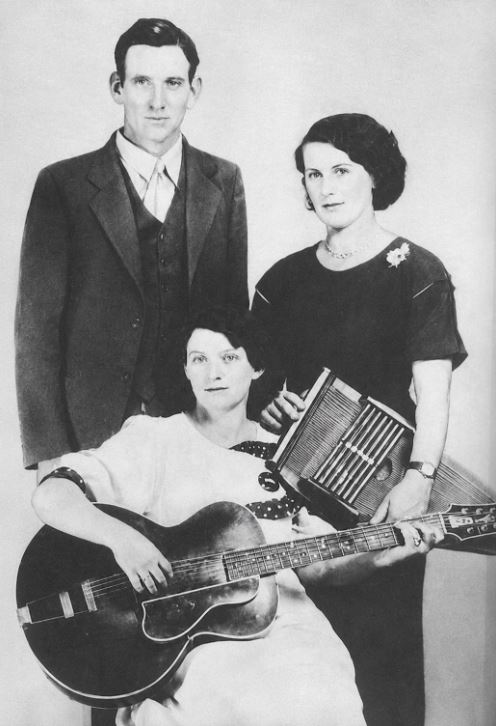
The Carter Family - often called the first family of country music - recorded their debut sessions on August 1, 1927, in Bristol, Virginia, a moment historians widely regard as the birth of commercial country music. A.P. Carter, his wife Sara, and sister-in-law Maybelle grew up steeped in mountain gospel music and shape-note singing, a tradition of harmony singing tied to Southern religious revivals dating back to the early 1800s. Of their earliest recordings, several were explicitly gospel songs, including "Poor Orphan Child" and "Wandering Boy," both rooted in themes of faith and redemption.
That gospel foundation never really left the genre. "Will the Circle Be Unbroken," a hymn written in 1907 and adapted by the Carter Family in 1935, became one of country music's most enduring songs - still sung today at the close of Country Music Hall of Fame induction ceremonies. Hank Williams' 1948 classic "I Saw the Light" remains a staple that crosses freely between country and gospel radio formats to this day.
The connection runs both directions. Southern Gospel quartets and country radio grew up side by side throughout the early-to-mid 20th century, and country gospel - sometimes called Christian country - emerged as its own recognized subgenre, carried forward by artists such as the Oak Ridge Boys, the Louvin Brothers, and Ricky Skaggs. Even today, artists like Vince Gill, Alan Jackson, and Marty Stuart regularly weave gospel songs into their live shows and recordings, a tradition also kept alive through the long-running Gaither Homecoming concert series.
It's a reminder that beneath the boots, the ballads, and the barroom themes that often define modern country radio, the genre's earliest DNA was shaped by hymns sung in small churches and mountain revivals - echoes of faith that, for many artists, have never fully faded.


