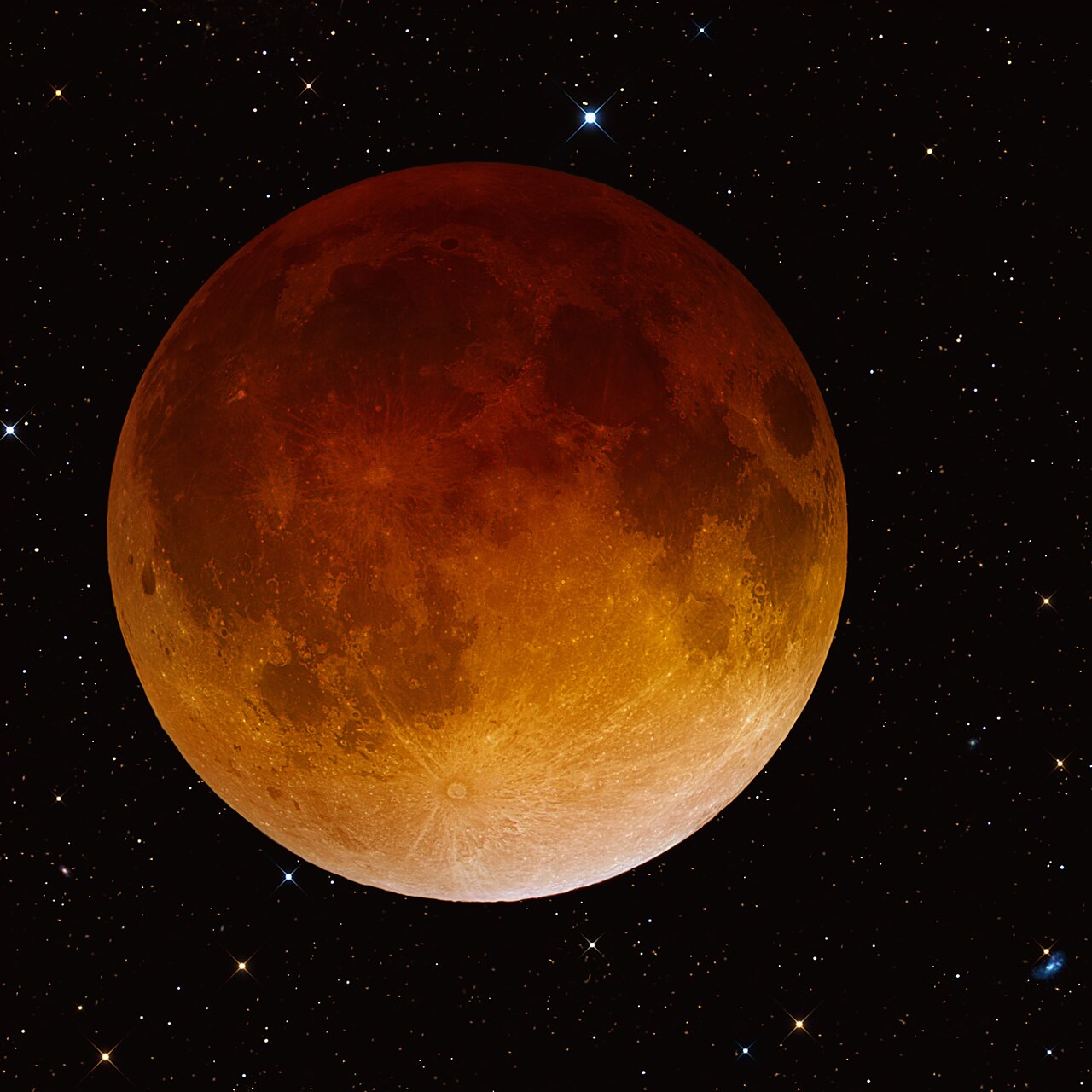
The Total Lunar Eclipse Blood Moon 2026 will reach peak visibility in the early hours of March 3, offering nearly a full hour of deep red totality across much of North America, the Pacific, and parts of Asia and Australia. Skywatchers who missed September's eclipse will have a rare opportunity to witness this dramatic celestial event - weather permitting.
If you haven't yet seen our full breakdown of the global schedule and visibility times, you can read our original coverage here: "The Moon Will Turn to Blood": A Rare Total Lunar Eclipse Arrives March 3, 2026
This follow-up guide explains the exact peak times, best viewing conditions, why the moon turns red, and what the Bible actually says about a "blood moon."
Exact Times for the Total Lunar Eclipse Blood Moon 2026
The eclipse unfolds gradually over several hours, but the most anticipated moment is totality - when the moon becomes fully immersed in Earth's shadow and glows crimson.
According to NASA projections, here are the key times:
Pacific Time (PT)
-
Penumbral eclipse begins: 12:44 a.m.
-
Totality begins: 3:04 a.m.
-
Maximum eclipse: 3:33 a.m.
-
Eclipse ends: 6:23 a.m.
Eastern Time (ET)
-
Penumbral eclipse begins: 3:44 a.m.
-
Totality begins: 6:04 a.m.
-
Maximum eclipse: 6:33 a.m.
-
Eclipse ends: 9:23 a.m.
Totality will last approximately 59 minutes, giving viewers nearly one full hour to observe the moon at its deepest red phase.
For those in the Western U.S., the moon will sit higher in the sky during peak totality. In the Eastern U.S., it will appear lower toward the western horizon as dawn approaches, making an unobstructed view especially important.
Where Will the March 3 Blood Moon Be Visible?
One of the reasons the total lunar eclipse blood moon generates so much global interest is its wide visibility range. Unlike a solar eclipse, which is only visible along a narrow path, a lunar eclipse can be seen anywhere on the night side of Earth.
Best Viewing Regions
-
Western North America
-
Pacific Islands
-
Australia
-
Eastern Asia
Early Morning Visibility
-
North America
-
Central America
-
Western South America
Not Visible
-
Most of Europe
-
Most of Africa
An estimated 2.5 billion people worldwide may be able to see at least part of this eclipse, depending on local weather conditions.
Clear skies remain the most important factor. Even light cloud cover can obscure the moon during totality.
Why Does the Moon Turn Red During a Total Lunar Eclipse?
The red hue that gives the event its nickname - "blood moon" - is caused by a scientific process known as Rayleigh scattering.
When Earth moves directly between the sun and the moon, sunlight must pass through Earth's atmosphere before reaching the lunar surface. During that journey:
-
Shorter blue wavelengths scatter in multiple directions.
-
Longer red wavelengths bend and continue forward.
-
That filtered red light illuminates the moon.
NASA describes the phenomenon as if all the world's sunrises and sunsets are projected onto the moon at once.
The exact shade of red can vary depending on atmospheric conditions such as:
-
Dust levels
-
Pollution
-
Volcanic ash
-
Cloud density
The more particles in the atmosphere, the deeper and darker the red may appear.
Do You Need Eclipse Glasses?
No.
Unlike a solar eclipse, the total lunar eclipse blood moon 2026 is completely safe to view with the naked eye. There is no direct sunlight involved, meaning no risk of eye damage.
For the best viewing experience:
-
Move away from bright city lights.
-
Allow your eyes 10-15 minutes to adjust.
-
Use binoculars for sharper detail.
-
A telescope can enhance shadow transitions and color contrast.
But even without equipment, the red glow should be clearly visible under clear skies.
How Long Will the Blood Moon Last?
The entire eclipse spans several hours, but the full red phase - totality - lasts just under one hour.
That 59-minute window is what makes this event especially memorable. Instead of a brief flash, viewers will have time to watch the moon slowly darken, shift colors, and glow deep crimson before gradually returning to its normal brightness.
Because the eclipse occurs during overnight hours across U.S. time zones, many will either stay up late or wake early. Astronomers note that all continental U.S. time zones will experience the eclipse in the middle of the night - meaning March 3 could bring some tired mornings.
Still, the rarity of a total lunar eclipse makes the early alarm worthwhile.
What Does the Bible Say About a "Blood Moon"?
While "blood moon" is a modern term rooted in astronomy, the imagery of a red moon does appear in Scripture.
The prophet Joel writes:
"The sun shall be turned to darkness, and the moon to blood..." (Joel 2:31)
This verse is later echoed in Acts 2:20. Historically, biblical scholars note that such language often symbolizes dramatic or significant events rather than serving as astronomical predictions.
Today, scientists fully understand that a total lunar eclipse occurs when Earth passes directly between the sun and the moon - a predictable alignment governed by orbital mechanics.
Still, celestial displays have stirred awe and reflection throughout history. For many people of faith, events like the total lunar eclipse blood moon are not moments of fear, but reminders of the vastness and order of creation.
Looking up at a crimson moon in the quiet hours of the morning can feel humbling - a pause from daily noise that invites perspective.
When Is the Next Total Lunar Eclipse?
If you miss this one, the wait may be significant.
While partial lunar eclipses occur more frequently, total lunar eclipses visible from the same region typically happen every 2 to 3 years.
According to current projections:
-
A partial lunar eclipse is expected in August 2026.
-
The next widely visible total lunar eclipse after March 2026 won't occur until 2029.
That makes the March 3 event one of the most notable sky events of the decade.
Final Reminder
The Total Lunar Eclipse Blood Moon 2026 reaches peak totality in the early morning hours of March 3 and lasts approximately 59 minutes. No special glasses are required - only clear skies and a willingness to look up.
For full global visibility times and additional details, read our original coverage here: A Rare Total Lunar Eclipse Arrives March 3, 2026
Set your alarm. Step outside. And watch as Earth's shadow transforms the full moon into a glowing red reminder of the wonder above us.


