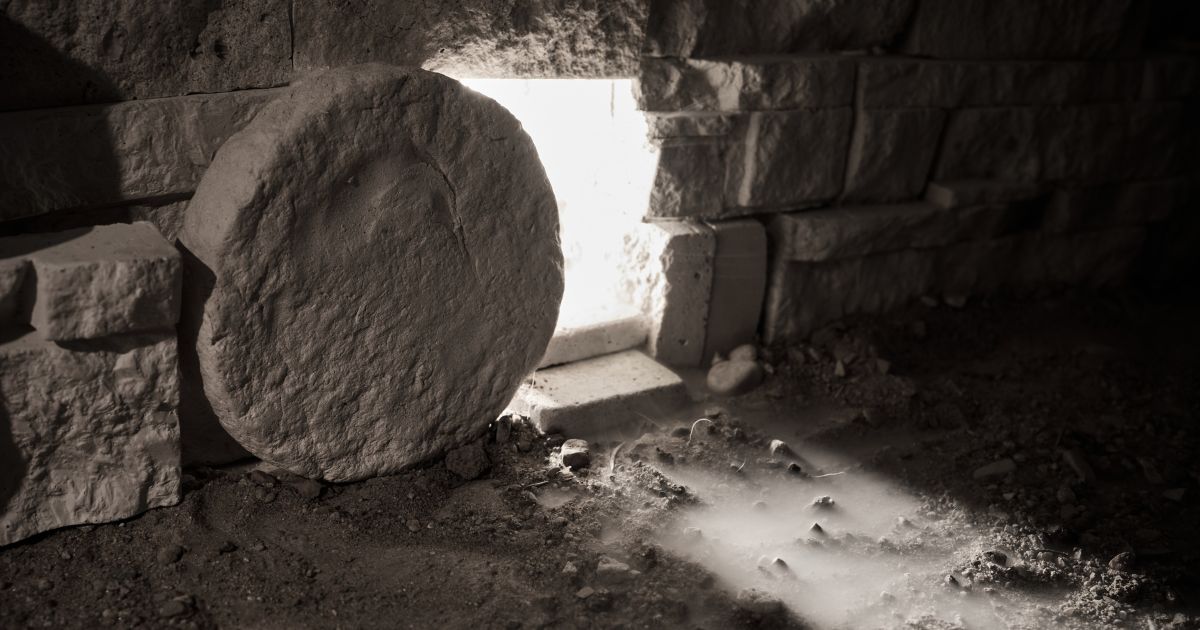
Black Saturday falls on April 4, 2026 - the day between Good Friday and Easter Sunday. It is the one day of Holy Week that carries no triumph, no public ceremony, and no resolution. It is simply the day Jesus lay in the tomb, and the world did not yet know what Sunday would bring.
What Is Black Saturday?
Black Saturday - also called Holy Saturday - is the seventh day of Holy Week, observed on Saturday, April 4, 2026, the day after Good Friday and the day before Easter Sunday. In the Christian calendar, it commemorates the period between the death of Jesus Christ on the cross and His resurrection - a span of time when His disciples believed everything was over.
The name "Black" is not incidental. It signals mourning, darkness, and grief. In the Philippines especially - where the observance runs deep in both Catholic culture and national tradition - Black Saturday is treated as a day of deep solemnity, quiet, and fasting. But its meaning extends far beyond any single country. Christians across every continent observe this day as one of the most spiritually weighty of the entire year.
What Happened on the Original Black Saturday?
According to the Gospel accounts, after Jesus died on the cross on Friday afternoon, His body was taken down and placed in a tomb provided by Joseph of Arimathea. A large stone was rolled across the entrance. Roman guards were posted at the request of the chief priests, who feared the disciples might try to steal the body and claim a resurrection had occurred.
The disciples scattered. Peter had already denied Jesus three times. Judas, who had betrayed Him, was dead by his own hand. The women who had followed Jesus - Mary Magdalene, Mary the mother of James, and others - rested on the Sabbath as required by Jewish law, grieving and powerless.
There was no service. No ceremony. No word from heaven. Just silence, grief, and a sealed tomb.
From where they were standing, the story was over.
Why Is It Also Called Holy Saturday?
The day carries two names that reflect two different emotional truths.
It is called Black Saturday because of the grief, darkness, and apparent finality of what happened on Good Friday. The disciples experienced it as the end of everything they had believed in and hoped for.
It is called Holy Saturday because the Church, looking back through the lens of the resurrection, recognizes this day as sacred - a threshold moment, a divine pause between death and life. What felt like defeat was, in fact, the hinge on which history was about to turn.
Both names are true. They describe the same day from two different vantage points: the disciples' raw experience, and the Church's understanding of what that silence was quietly holding.
The Easter Vigil: When Darkness Becomes a Declaration
One of the most ancient and powerful Christian traditions takes place on the evening of April 4, 2026 - the Easter Vigil.
Originating as early as the second century, the Easter Vigil is held after sundown on Holy Saturday and marks the beginning of Easter. In Catholic, Orthodox, and many Protestant traditions, it begins in complete darkness. A single flame is lit - the Paschal Candle - and from that one light, candles carried by the entire congregation are ignited one by one, until the whole church is filled with light.
It is not merely symbolic. It is a declaration. The darkness that characterized the day is being physically displaced by light - a living re-enactment of what Easter morning means for the world.
The Easter Vigil typically includes the reading of Scripture from Creation through the Exodus through the Prophets, followed by Baptisms and the first Eucharist of Easter. For many traditions, it is considered the holiest night of the entire year.
What Black Saturday Means for Believers Worldwide
There is a reason Black Saturday resonates so deeply with people who have experienced seasons of waiting, loss, or unanswered prayer.
This is the day that mirrors what it feels like to be in the middle of a story that has not ended yet - but from where you are standing, it looks like it has. The disciples were not wrong to grieve on that Saturday. Their grief was real. Their confusion was honest. They simply did not yet know what Sunday would bring.
Black Saturday gives language and space to the in-between. Not every hard situation resolves on Friday night. Some situations require waiting through a Saturday that feels utterly silent. And the message of Holy Week is that Saturday's silence does not mean the story is over. It means Sunday is still coming.
How Black Saturday Is Observed Around the World
Philippines: Black Saturday is one of the most widely observed holy days in the country. Many Filipinos fast, attend church, and refrain from work, loud music, and celebrations. It follows the deep solemnity of Good Friday and is kept as a day of quiet reflection and prayer.
Catholic Church (Global): Mass is not celebrated during the daytime on Holy Saturday. The day is kept in silence until the Easter Vigil begins after sundown - making it the only day in the entire year when the Catholic Church holds no daytime liturgy anywhere in the world.
Eastern Orthodox: Orthodox Christians observe Holy Saturday with Lamentations services on Friday evening and special Liturgies on Saturday morning, followed by the great Paschal Vigil at midnight, which marks the moment of resurrection.
Latin America: In countries like Mexico, Brazil, Colombia, and throughout Central America, Black Saturday is observed with processions, silent prayer, and in many communities, the burning of effigies symbolizing the defeat of evil - a tradition that transitions the mood from mourning toward Easter celebration.
Europe: In Spain, Italy, Poland, and Greece, Holy Saturday is marked by solemn church gatherings, fasting, and preparation for Easter Sunday. In Poland, the blessing of Easter food baskets - called Święconka - traditionally takes place on Holy Saturday morning.
Protestant traditions: Observance varies widely across denominations. Some churches hold prayer services or reflection gatherings; others keep April 4 quiet until Easter Sunday morning celebrations begin on April 5, 2026.
Quick Reference: Black Saturday 2026
Black Saturday falls on Saturday, April 4, 2026. It is the seventh day of Holy Week, positioned between Good Friday and Easter Sunday, and is also known as Holy Saturday. The primary observances are silence, fasting, prayer, and the Easter Vigil, which begins after sundown on April 4. Easter Sunday follows on April 5, 2026.
The Day the Disciples Did Not Know the Ending
There is one detail about Black Saturday that is easy to overlook: the disciples had no idea Sunday was coming.
They had heard Jesus speak about rising on the third day. But grief has a way of making words like that feel impossible. What they knew on April 4 - in the weight of that first Saturday - was that the man they had followed for three years was dead, buried, and guarded. Their hopes were sealed behind a stone.
This is why Black Saturday is not simply a historical footnote between two better-known days. It is the day that asks the honest question every believer eventually faces: Can you trust the story even when you cannot see the ending?
The women prepared spices to bring to the tomb on Sunday morning. They were not expecting a resurrection. They were preparing to properly mourn a death.
And yet Sunday came.
A Final Word for Every Timezone
Black Saturday begins and ends at different hours for readers around the world. Whether April 4, 2026 arrives first in Auckland, then Mumbai, then Nairobi, then London, then São Paulo, then Los Angeles - the day carries the same weight and the same promise in every timezone.
The tomb is sealed on April 4. Easter Sunday - April 5, 2026 - is hours away.
He is risen - tomorrow.
Related: What Is Holy Week? A Simple Day-by-Day Explanation
Related: Holy Week 2026: Full Guide to Every Day, What It Means, and Why It Matters


