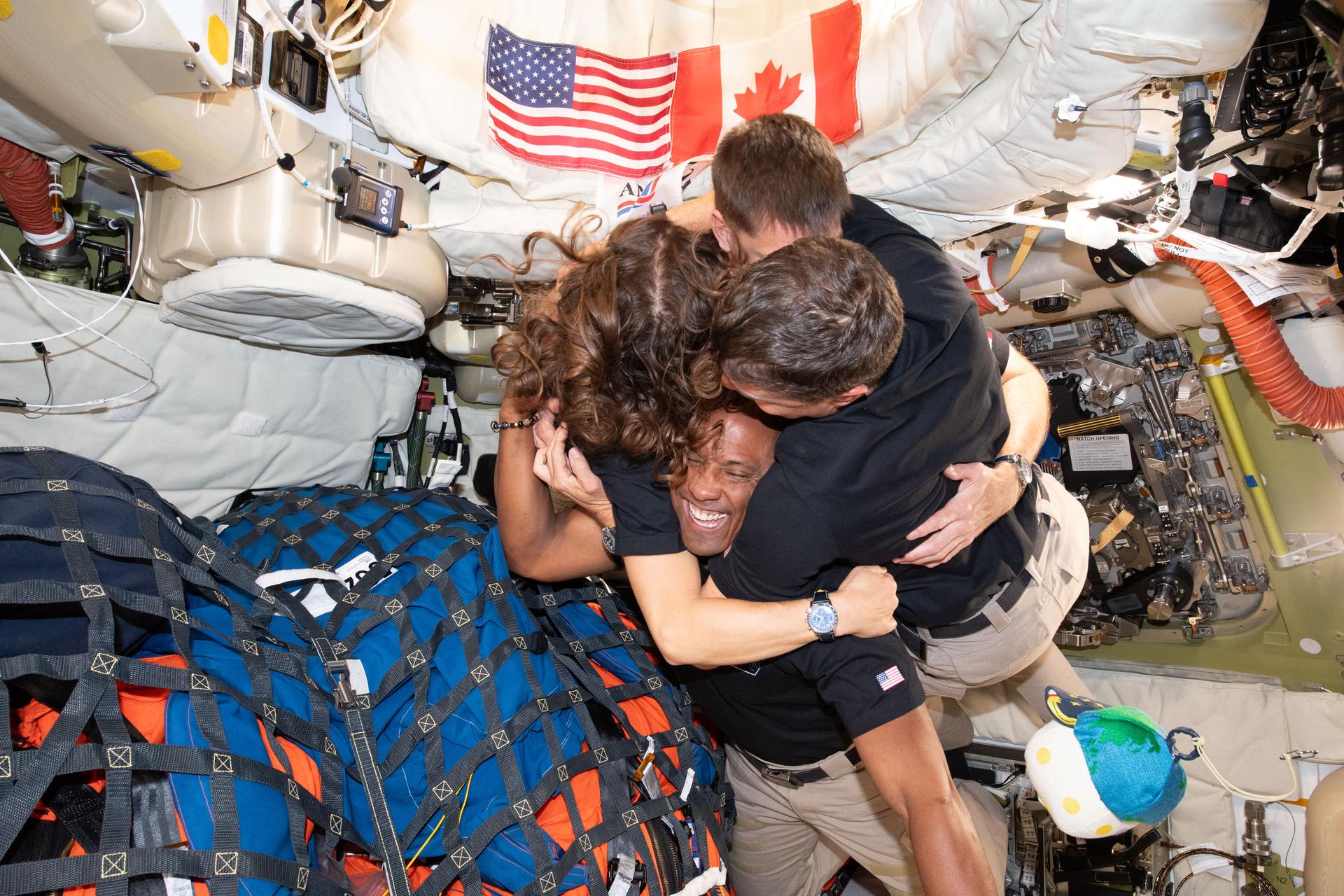
The Artemis II astronauts are officially on their way home after completing a historic flyby around the Moon, marking one of NASA's most important deep-space milestones in over 50 years. Now, as the Orion spacecraft begins its return journey, all attention shifts to a high-risk re-entry through Earth's atmosphere.
The four-person crew-Reid Wiseman, Victor Glover, Christina Koch, and Jeremy Hansen-spent roughly 10 days in space testing systems designed for future lunar missions. After successfully exiting the Moon's gravitational influence, they are now preparing for a Pacific Ocean splashdown scheduled for April 10, 2026.
But before that moment, NASA must navigate what officials describe as the mission's most dangerous phase: re-entry.
The Final Descent: "13 Minutes of Things That Must Go Right"
The Orion capsule will soon plunge into Earth's atmosphere at nearly 24,000 miles per hour, enduring extreme temperatures of around 5,000°F. This intense phase will last less than 15 minutes but carries significant risk.
During re-entry, the spacecraft will:
- Separate from its service module
- Enter a brief communications blackout caused by ionized plasma
- Experience up to 3.9 G-forces
- Deploy parachutes at low altitude to slow descent
NASA flight directors have repeatedly emphasized the precision required. "It's 13 minutes of things that have to go right," one official noted, referring to the narrow margin for error during atmospheric entry.
Heat Shield Concerns Add to Mission Pressure
This return is especially critical because Artemis II is flying with a heat shield design that previously showed unexpected damage during Artemis I, an uncrewed test mission.
To reduce risk, NASA adjusted Orion's return path, opting for a steeper and faster re-entry angle to limit the time the spacecraft spends under extreme heat stress.
While officials say they have "high confidence" in the modified trajectory, the heat shield remains one of the most closely watched components of the mission.
Recovery Teams Stand Ready in the Pacific
As Orion approaches Earth, U.S. Navy recovery ships and helicopters are already stationed in the Pacific Ocean near the expected splashdown zone off the coast of California.
Once the capsule lands:
- Recovery teams will secure and stabilize Orion
- Astronauts will be extracted after safety checks
- The crew will transfer to the USS John P. Murtha
- Medical evaluations will begin immediately
Within hours, the astronauts are expected to begin their journey back to NASA's Johnson Space Center in Houston.
A Mission That Shapes NASA's Future in Space
Artemis II is more than a test flight-it is a critical step toward returning humans to the Moon. The mission validates life support systems, navigation, propulsion, and communications for future lunar landings under NASA's Artemis program.
While the Moon flyby was a historic achievement, NASA officials stress that the mission is not complete until the crew is safely home.
As one flight director summarized: "The crew has done their part. Now we have to bring them home."
All Eyes on Splashdown
As Artemis II approaches its final hours, the world is watching a defining moment in space exploration unfold. From lunar orbit to atmospheric re-entry, every step now leads toward one goal: a safe return to Earth.
If successful, Artemis II will not only mark a technical achievement-it will pave the way for humanity's next giant leap back to the Moon.


