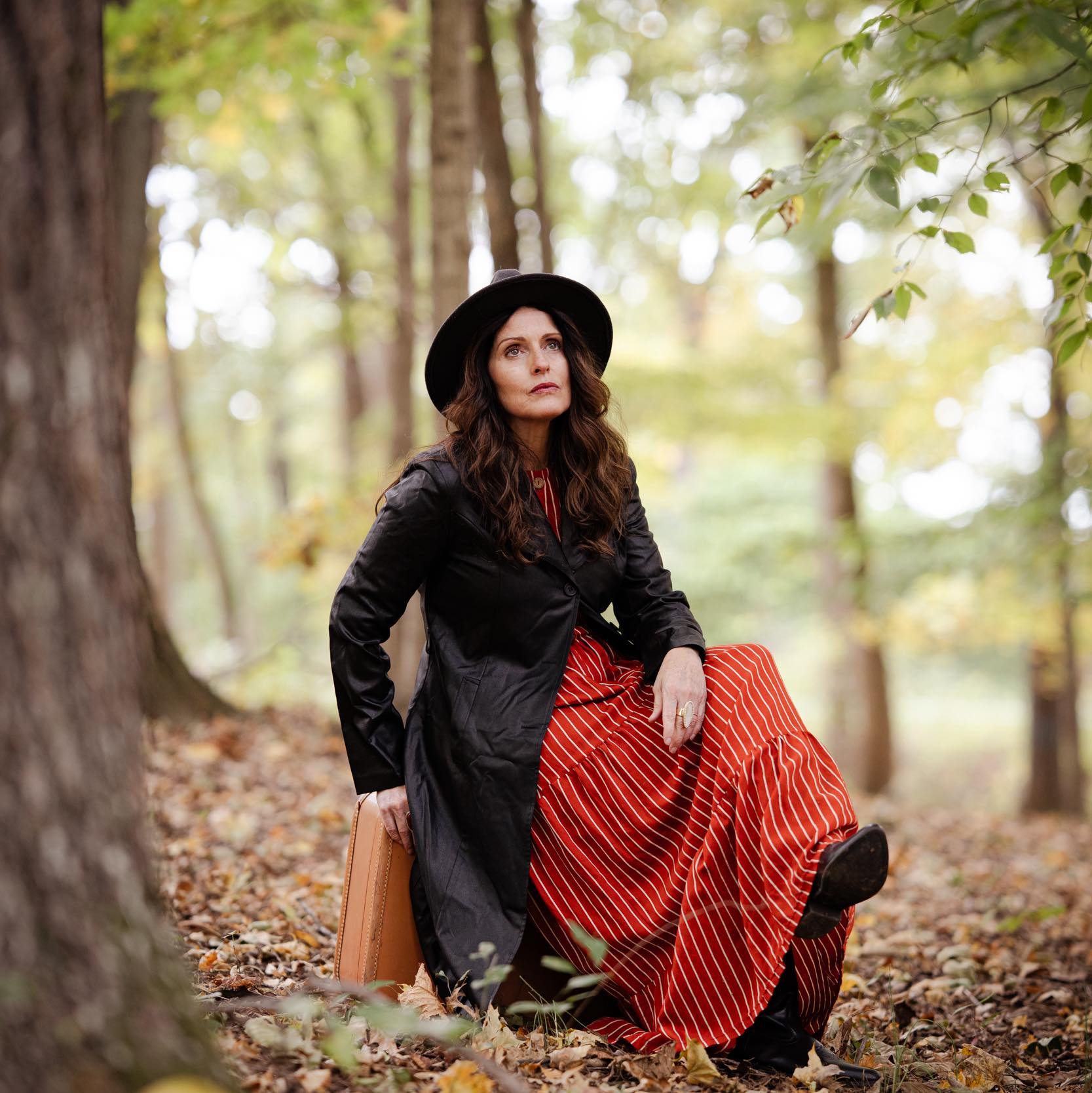
Few artists in Christian music have balanced poetic vulnerability and spiritual depth quite like Cindy Morgan. Across decades of songwriting-from beloved 90s albums to award-winning projects like "Jubilee"-Morgan has built a career marked by emotional honesty, reflective storytelling, and an unwavering willingness to wrestle with life's deepest questions.
Her new single, "Rainbow," may be one of her most personal releases yet. Inspired by profound personal loss and a haunting hospice-room experience involving "Somewhere Over the Rainbow," the song meditates on grief, heaven, uncertainty, and the fragile tension between longing for reunion and not yet being ready to let go of this life.
In this conversation, Morgan opens up about loss, songwriting, collaboration, creativity, and the mysteries that continue to shape both her faith and music.
Q: From your early breakthrough with Real Life and A Reason to Live in the 1990s to recent projects like The Sounds of Jubilee and now "Rainbow," how do you feel your artistry and songwriting have evolved over the decades?
I think it has been a season of looking back not only on the genesis of my music career, but also on the evolution of writing songs for different phases of my life.
Back in the 90s, when I was doing pop music, not to say those lyrics did not have merit or depth-I believe they did-but I was still figuring out who I was as a singer-songwriter. I think "Rainbow" is a representation of where I am in my life today, and every record is like a page out of a person's life.
Q: "Rainbow" wrestles with grief, longing, and uncertainty about what comes after this life. After experiencing the loss of your father and brothers, what personal emotions most shaped the writing of this song?
It happened a few years ago when I was visiting someone in hospice to sing for them. Ordinarily, people like to hear hymns at the end of their lives, but this woman asked me to sing "Somewhere Over the Rainbow." I don't think she was a person of faith, but that song brought her a lot of peace. I sang it to her as she passed, and ever since then that song has always carried such sadness for me.
I guess "Rainbow" is asking questions about heaven and the mysteries that we can't answer with total certainty. I think everyone, in some way, is afraid of death because we don't know exactly what will happen. This song is a little bit of wrestling with that.
Q: Your catalog has consistently balanced vulnerability, faith, and poetic storytelling. How has your personal journey-including motherhood, loss, and life changes-influenced the emotional honesty listeners hear in your music today?
I think most writers write what they know. Sometimes that's bad news for the people around you because no one is safe! :)
But honestly, I think people are drawn to songs that take risks. Maybe it's a flaw that I have taken a lot of risks in my songwriting, but I feel compelled to do so. I hope I always will. Though I never want to hurt anyone with my songwriting, I always want to be honest and risk something because I think that's where the real connection happens between a songwriter and the listener.
People are struggling in their own lives every day, and I think it helps when you hear a song that highlights that struggle.
Q: You've worked across many creative spaces, from your solo career to collaborations like St. Lola in the Fields with Jeremy Bose and projects such as the "Hymns for Hunger" tour with Andrew Greer. How have those collaborative experiences shaped your perspective as both an artist and storyteller?
Nashville is a town of collaboration. There are so many incredibly gifted people in this town with whom I've been so grateful to collaborate. It never fails that when you get in a room with someone who sees or hears things differently than you do, a much different-and often much better-song comes out of it.
I've been so grateful for all of the collaborations I've been able to do. The Sounds of Jubilee is a perfect example. I got to collaborate with so many of my dearest friends and heroes on that record. My St. Lola partner Jeremy Bose is my favorite co-writer. We connect on a creative wavelength that just works.
Q: Throughout your career, you've written songs for major artists including Vince Gill, Amy Grant, Rascal Flatts, and Glen Campbell. What have you learned about connecting emotionally with audiences across different genres and generations?
I think people want to hear something honest and relatable. I love hearing other people's stories, and in those moments when I get to write with other artists and help tell a story with them, it's always a beautiful surprise.
Songwriting is still a mystery to me. Even after writing thousands of songs, I still sometimes just stare at my piano or guitar and say, "I wonder what will happen today?" I'm glad it's still a mystery, and I hope it always will be.
Q: Looking ahead beyond "Rainbow," what creative directions, future music, or personal themes are inspiring you most in this current season of your career?
I'm working on about four projects at once. I love Joni Mitchell's theory about crop rotation.
I'm working on a throwback record featuring Americana/pop acoustic versions of some of my old 90s dance hits.
I'm also working on an EP called The Mechanic's Daughter, which is a follow-up to Old Testaments, Vol. 1.
I'm also working on a documentary and my third historical fiction novel. My second novel releases in October. It's called The Dogwood Gospel.
I feel like all of the creative projects I do feed into one another.
I also love touring and producing other artists, but writing will always be my first love.
Listen to "Rainbow" here.
Related Article: Veteran Christian Artist Cindy Morgan Returns with Powerful New Ballad "Rainbow," Dropping May 15


