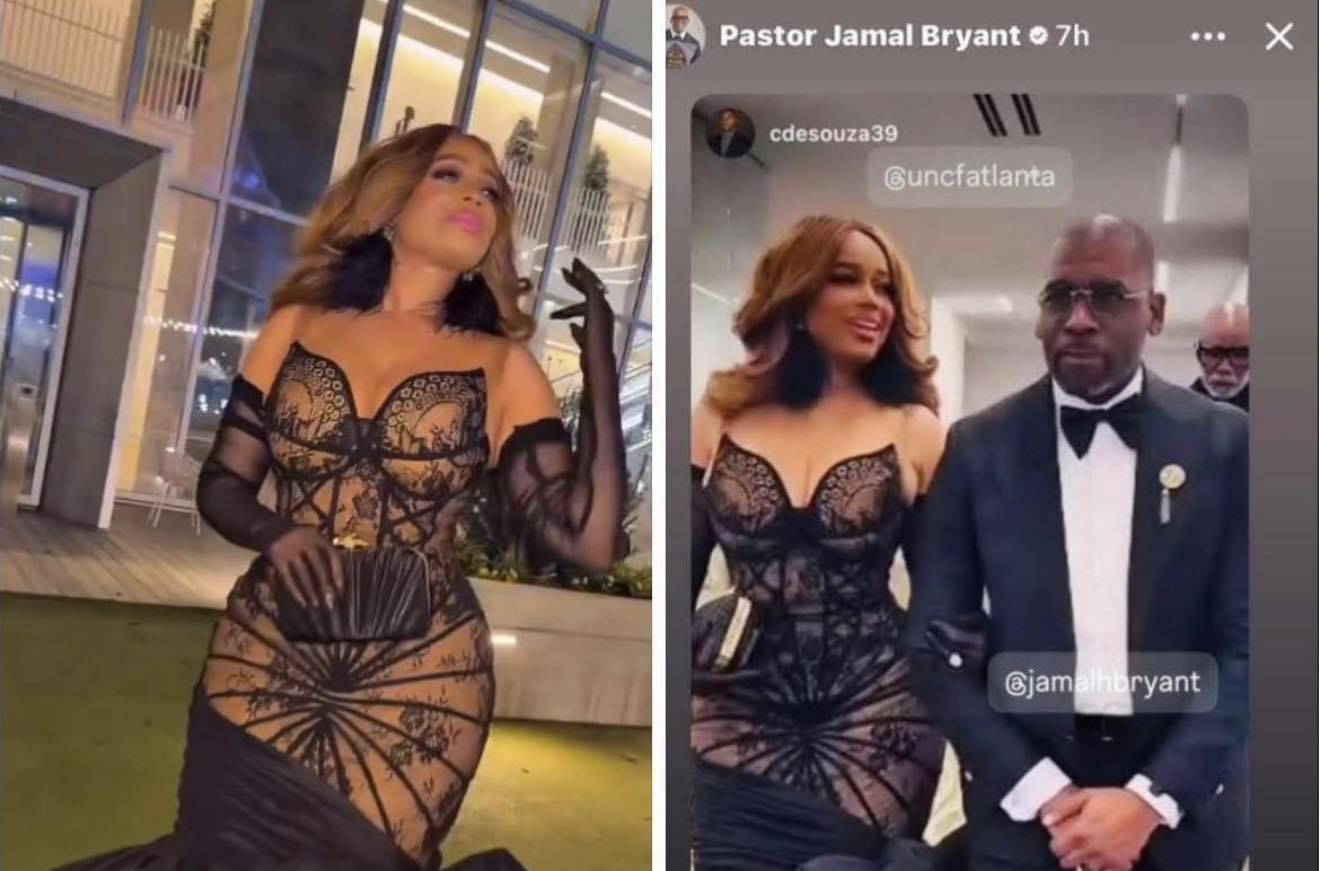
During a New Year's Eve worship service at New Birth Missionary Baptist Church, Pastor Jamal Bryant publicly defended his wife, Dr. Karri Turner, after she faced online criticism over the dress she wore to a recent UNCF fundraising event.
Dr. Turner had been criticized by some on social media who described her black dress with skin-tone meshing as "too revealing" and "unbecoming" of a pastor's wife, with others labeling her style as "worldly." Addressing the controversy head-on, Pastor Bryant used his New Year's Eve sermon-aptly titled "And Y'all Are Worried About a Dress"-to call out what he described as entrenched misogyny and double standards within church culture.
From the pulpit, Bryant challenged the fixation on policing women's bodies, arguing that such critiques distract from far more pressing concerns facing both the church and the broader community. He noted that while critics were quick to comment on attire, they largely ignored the significance of the UNCF event itself and the meaningful work being done to support education and opportunity.
Bryant further emphasized that Dr. Turner's contributions and character should not be overshadowed by superficial judgments, questioning why outward appearance so often becomes a focal point when issues of justice, equity, and service demand greater attention.
The incident has reignited a broader conversation about how women-particularly women in visible ministry or leadership roles-are scrutinized for their appearance. Dr. Turner is far from alone. Other prominent Christian women, including Erica Campbell, Meagan Good, and Jekalyn Carr, have also publicly faced criticism over their attire, sparking ongoing debates about modesty, gender expectations, and cultural double standards within the church.
Pastor Bryant's remarks were met with strong responses both in-person and online, with many applauding his willingness to confront what they see as harmful and outdated norms. As the new year begins, his message has prompted renewed reflection on how faith communities can better honor women-not by scrutinizing their clothing, but by affirming their calling, contributions, and humanity.


