Most Christians around the world will celebrate Easter this Sunday, April 5. But for hundreds of millions of Orthodox Christians across Greece, Russia, Ukraine, Romania, Egypt, and beyond, Easter Sunday is not April 5. It is April 12 - a full week later. Same resurrection. Same faith. Different calendar - and the reason behind it goes back nearly 1,700 years.
Two Easters, one resurrection
Western Christian denominations - Catholic and Protestant - follow the Gregorian calendar, while the Orthodox Church still uses the Julian calendar to calculate Easter's date. Both traditions agree on the foundational rule established at the Council of Nicaea in 325 AD: Easter falls on the first Sunday after the first full moon following the spring equinox. The disagreement is not over the rule. It is over which calendar is used to calculate it.
The Julian calendar currently lags 13 days behind the Gregorian calendar. That gap shifts when the ecclesiastical full moon lands, which in turn shifts when Easter falls. In 2026, the Western calculation arrives at April 5. The Orthodox calculation, using the Julian system, arrives at April 12. Orthodox rules also require that Easter always falls after the Jewish Passover - a rule Western churches no longer follow. That additional requirement can push the Orthodox date even further into spring in some years.
How far apart can they get?
In 2026 the two dates are just one week apart - which is relatively close. In some years both calculations land on the same Sunday, as they did in 2025, and will again in 2028. In other years the gap can stretch to five weeks. Orthodox Easter always falls somewhere between April 4 and May 8 on the Gregorian calendar - meaning it can never come before Western Easter, only after.
How Orthodox Christians celebrate
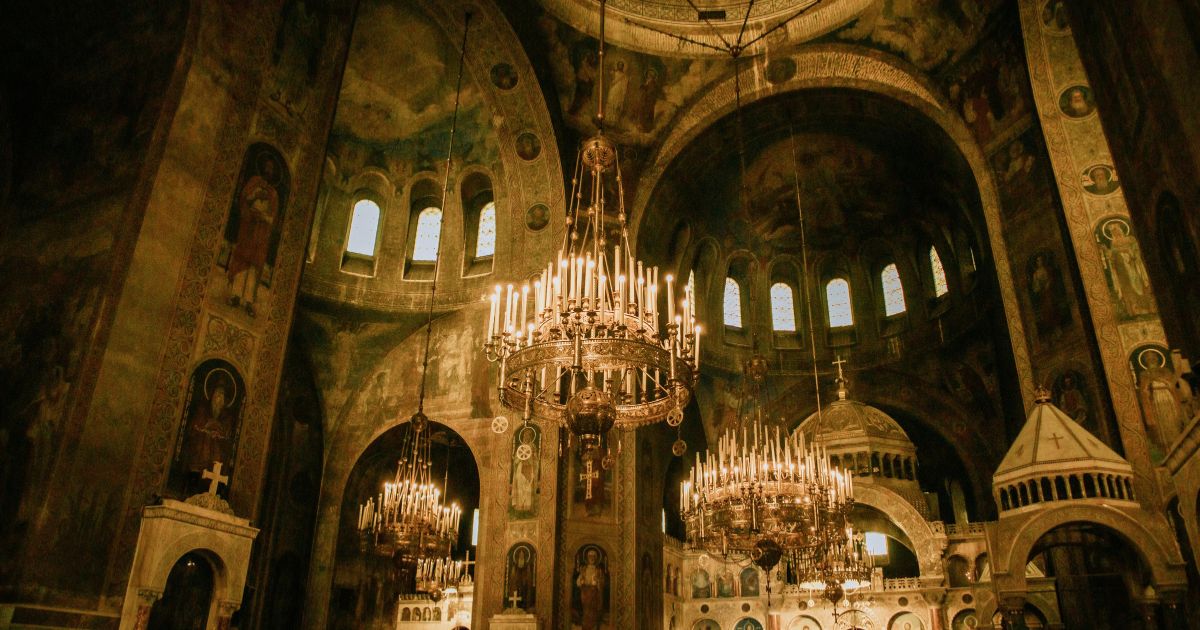
The traditions surrounding Orthodox Easter - known as Pascha - are deeply rooted and richly observed. The celebration involves midnight services, liturgical processions, and the proclamation of the resurrection. Orthodox Pascha services are long - the Easter liturgy begins on Saturday evening and continues through Sunday morning. In many communities, the service culminates with a candlelit procession and the joyful declaration "Christos Anesti" - Christ is risen - answered by the congregation: "Alithos Anesti" - truly He is risen. Eggs dyed red are a central symbol, representing the blood of Christ and the joy of the resurrection.
For the global Christian community, having two distinct Easter celebrations on the calendar is not a source of confusion but a reminder of just how wide and varied the body of believers truly is. The dates differ. The declaration does not.
Related: Holy Week 2026: Full Guide to Every Day, What It Means, and Why It Matters
Related: Palm Sunday 2026: When It Is, What It Means, and How Christians Around the World Celebrate It
Related: Holy Monday 2026: What Jesus Did the Day After Palm Sunday and Why It Still Matters
Related: Orthodox Easter 2026 Falls on April 12: A Week After Western Easter, and Here Is Why


